AI’s Low-Hanging Fruit in Agriculture: Data, Predictions, and the Digital Twin
8 min readCollins P. Ohagwu
Farming is harder than it looks. As Dwight Eisenhower famously quipped,
“farming looks mighty easy when your plow is a pencil, and you’re a thousand miles from the corn field.”[1].
A recent report by Anthropic confirms this: agricultural work remains largely “beyond AI’s reach”[2].
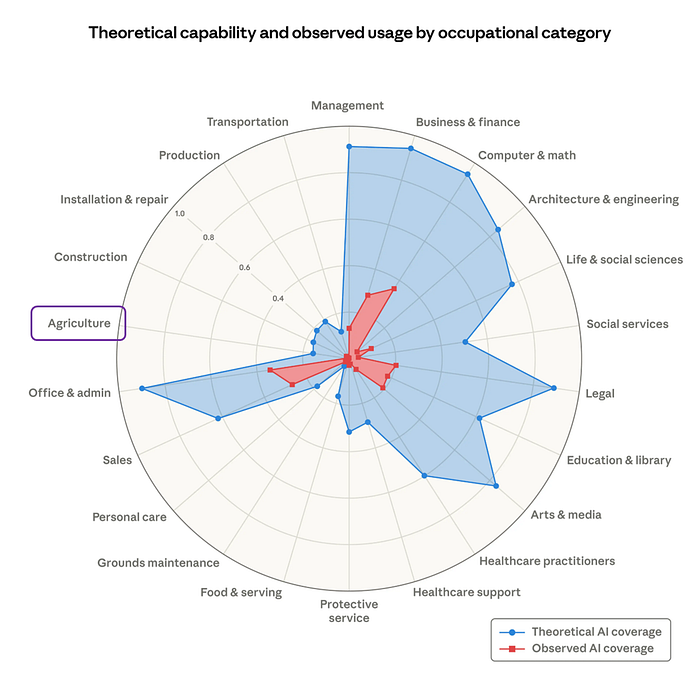
In practice, roles like farmworkers or equipment operators show almost zero exposure to today’s AI tools[2][3]. The Anthropic study shows that AI — especially in its current generative form — “excels at manipulating data, language, and code” but “struggles profoundly with the non-standardized, physically demanding… tasks required in the field”[3]. In other words, a chatbot can write about farming, but it can’t drive a tractor or prune a tree. This mismatch is a clue: in agriculture, the real low-hanging fruit lies not in creative text generation, but in data-driven prediction and integration.
Generative vs. Predictive AI
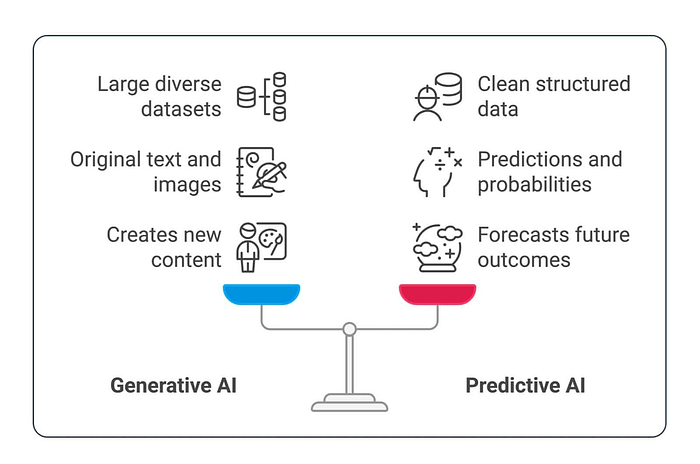
To understand where AI can actually help, it’s useful to distinguish between its two main branches. Generative AI (like ChatGPT or image generators) learns patterns from unstructured data — text, images, and audio — and produces new content. By contrast, predictive (or analytical) AI uses structured data to forecast outcomes and optimize operations. As McKinsey & Company notes, generative AI “process[es] large and varied sets of unstructured data,” whereas predictive AI “solves specific tasks by making predictions based on well-structured data sets and predefined rules” [4].
In farm terms, generative AI might draft a blog about irrigation or suggest planting designs, but predictive AI will tell you how much water that field will need next week, or which crop will give the best yield. These predictive insights are what farming cares about.
The Foundation: Data
“AI is all about data,” and in agriculture the distinction between structured and unstructured data is stark. Large agribusinesses (e.g. grain conglomerates, dairy co-ops) often have decades of well-kept records: sensor logs, inventories, transaction histories all stored in databases. Small farmers, by contrast, tend to have messy or informal data: scattered Excel spreadsheets, WhatsApp chat threads, photos of hand-written notes, and so on. When teams use different formats or units for data, insights break down. As one field manager lamented,
“One rep records seed rate in lbs/acre, another by bag count, and a third doesn’t record it at all… The resulting report is a patchwork of incomparable numbers”[5].
This fragmentation is no small obstacle. A CAST analysis highlights data incompatibility as a key barrier:
“agricultural data are commonly fragmented, distributed, heterogeneous, and incompatible, making it challenging to structure data… for AI”[6].
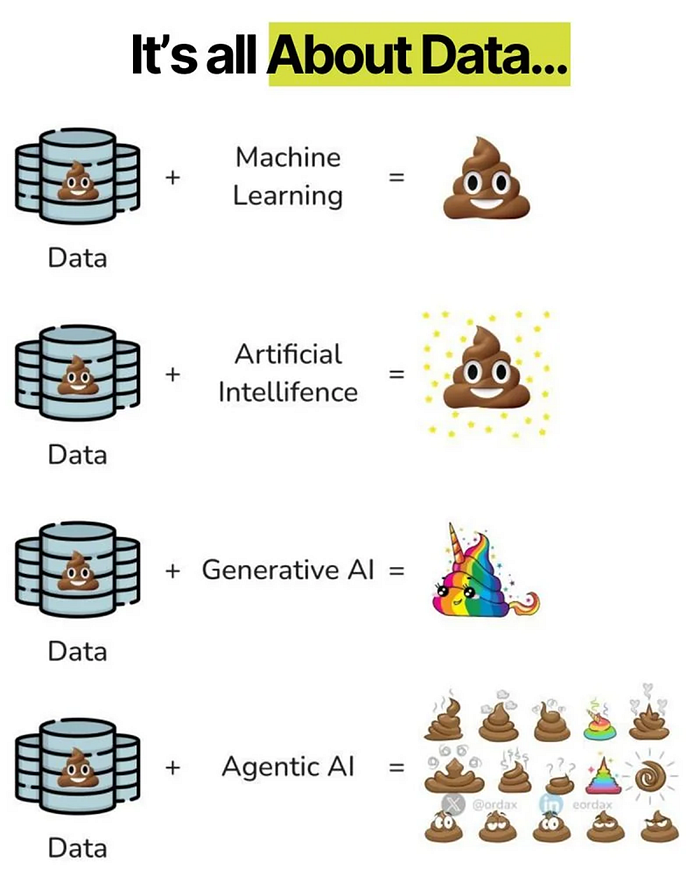
In practice, that means before you ever run a model, you must invest in cleaning and standardizing your data. The biggest returns on AI often come from this phase: farms that adopted standardized data collection saw dramatically better predictions and decisions. In one example, integrating drones and IoT sensors into a unified system improved irrigation scheduling accuracy by 20%, directly boosting yields[7]. (That kind of gain comes from structured data, not a fancy chatbot.)
Large Farms vs. Small Farms: Who Needs What
Putting these ideas together, two obvious positions emerge:
- Large Producers = Big Structured Data. If your organization already uses a farm-management database or ERP, your data is (mostly) structured. You probably pull dashboards from it daily and trust those metrics. In this case, predictive AI — e.g. advanced statistical models and machine learning — is most valuable. You don’t need a generic generative AI like ChatGPT telling you about crops; you need custom forecasting and optimization tools that work on your data. In other words, you want better predictions (yields, prices, logistics), not more creative content. Any AI initiative for you should start by leveraging your structured data to improve those forecasts[4][8]. Large capital expenditures in agriculture leave no room for wrong forecasts: a single bad prediction can wipe out millions in costs. Predictive analytics helps avoid those losses by simulating scenarios and weighing risks[9].
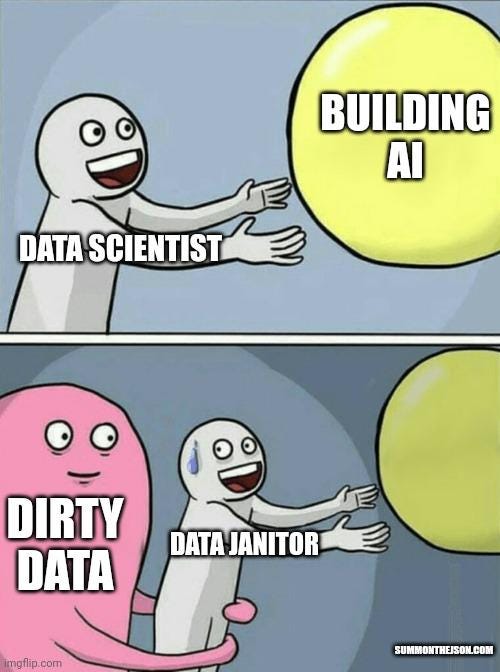
- Small Producers = Messy, Unstructured Data. If you run a small farm (or any operation without a central database for most data), your first priority is to “get your house in order.” That means moving existing records into a consistent system: use a single database or farm-management app instead of dozens of scattered spreadsheets and text chats. Where historical data lives in WhatsApp messages, photos of receipts, or PDF reports, you can use modern AI tools (including LLMs) to help extract and organize it. For example, a large language model can parse unstructured notes into tables, automatically categorizing activities or inventory from your texts and images[10]. (Researchers note that current LLMs “have the potential… to automate tasks such as structuring unstructured metadata…converting metadata from one format to another”[10].) But automated help aside, the core step is process: standardize your data collection, use digital forms, and ensure everyone records inputs the same way[5][11]. In short, become as “structured” as possible. Until you do, any AI will be building on shaky ground.
- In Between. Many farms and agribusinesses fall between these extremes — perhaps they have some database but still rely on spreadsheets or disconnected tools. Regardless of size, the goal is the same: achieve “large producer” status of data. That means a single source of truth: a reliable, queryable repository where your farm’s truth resides. Once you have that, you can truly leverage AI’s potential.
The Three Phases of AI Adoption
Successful AI projects in agriculture tend to follow a clear progression:
- Data & Infrastructure Layer. Build your foundation first. This includes consolidating databases, ensuring sensors and devices feed into them, and cleaning historical records. It means moving from manual processes (spreadsheets, PDFs, siloed departments) to automated, standardized data capture. Without this, AI is a vanity project — the output will simply reflect your data’s messiness. (As one expert put it, ignoring this layer is either selling snake oil or being “completely oblivious of how AI truly works.”) Data standards initiatives like AgGateway are a model: by agreeing on common formats, firms can auto-share data and even cut order-processing times in fertilizer sales[12].
- Logic & Modeling Layer. Once data flows are solid, we enter the realm of predictive models and analytics. This is the classic “data science” phase: using historical and real-time data to train models that forecast yields, optimize irrigation schedules, predict disease outbreaks, or price commodities. These models improve the heuristics that drive your operations. For example, machine learning can combine weather, soil, and crop data to forecast the season’s harvest with high accuracy, or to schedule harvests just before a pest surge. These insights translate into operational changes that create value — lowering costs and raising outputs. As one review notes, predictive analytics can help growers “forecast future yield and productivity… and identify fields… where ROI is repeatedly lower,” allowing resources to be reallocated more profitably[13].
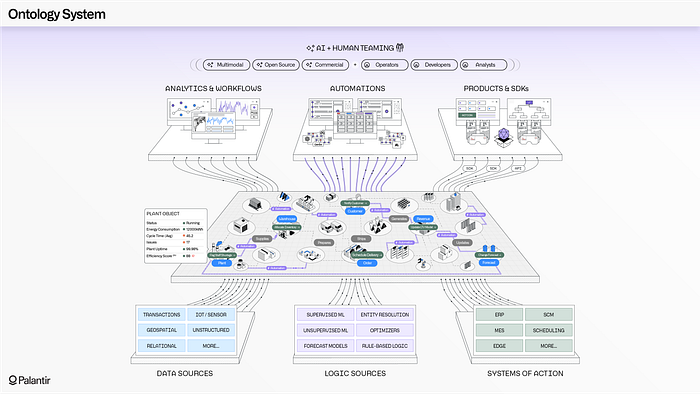
- Digital Twin / Integration Layer. The final step is to create an integrated “digital twin” of the farm. This means tying together all data and logic into a cohesive model of your enterprise. Think of it as an advanced ontology or AI-powered operating system (à la Palantir Foundry’s vision) that understands the semantics of your farm: how fields, machinery, products, and market factors interrelate. In this phase, automated systems can run continuous simulations — virtually tweaking variables to find optimal strategies — and even execute small decisions in real time. For example, a digital twin might dynamically schedule tractors and labor, or instantly adjust irrigation based on AI’s next-best-action analysis. In short, you move from one-off forecasts to a living model of your business that continuously learns and optimizes. (This is truly harvesting AI’s highest fruit, enabling transformations like precision water use and waste reduction without extra human oversight.)
Skipping steps is the usual pitfall. Many case studies of AI failure trace back to jumping to fancy ML or chatbots without a proper data foundation. By contrast, the most successful pilots start with standardized data, prove a predictive model in a small domain, and then gradually scale into a full digital twin architecture.
What did we learn? Large farms should double down on predictive analytics, not waste budget on generic chatbot subscriptions. Small farms should double down on data hygiene — invest in mobile apps, data-sharing platforms, or basic databases so that future AI can plug in. In both cases, the prize is better decisions and higher ROI. It’s no wonder experts emphasize that “data quality and availability” is as important as the AI models themselves[11].
More in artificial-intelligence




Cubed
Write about the technologies shaping the future.
For developers, founders, and curious minds exploring AI, crypto, Web3, and emerging tech—signal over noise.
One free account across In Plain English, Stackademic, Venture, and Cubed.
How it works- AI, crypto & Web3
- Software & emerging technologies
- Analysis & practical resources
- Thoughtful voices, not hype
Sign in
Google or GitHub
Complete profile
Takes a few minutes
Get approved & publish
Start sharing
Why write for Cubed?
The future deserves thoughtful voices, not just louder headlines.


Comments
Loading comments…