You’re Treating Prompts Like Code — That’s Why Things Keep Breaking
Each of the techniques prompt engineering, fine-tuning, and RAG addresses a separate problem. If they are used incorrectly, the result will be AI systems that are weak and unable to handle large-scale operations.
3 min readNagaraj

I constantly modified the prompt. It was successful — but not forever.
Each minor alteration solved one problem and created two others at the same time. The system was slowly moving towards the goal but still never feeling secure.
That’s when it dawned on me: I wasn’t building a system, rather I was bargaining with it.
And bargaining doesn’t go far.
🔹 Prompt Engineering Begins with Victory — Then Sinks Down
The power of prompt engineering is its instant effect.
No pipelines, no infrastructure, and no formalities.
But that is the very issue.
Chains of prompts silently accumulate responsibility:
- Business rules
- Formatting logic
- Edge-case considerations
- Security considerations
Nothing appears. Nothing can be tested.
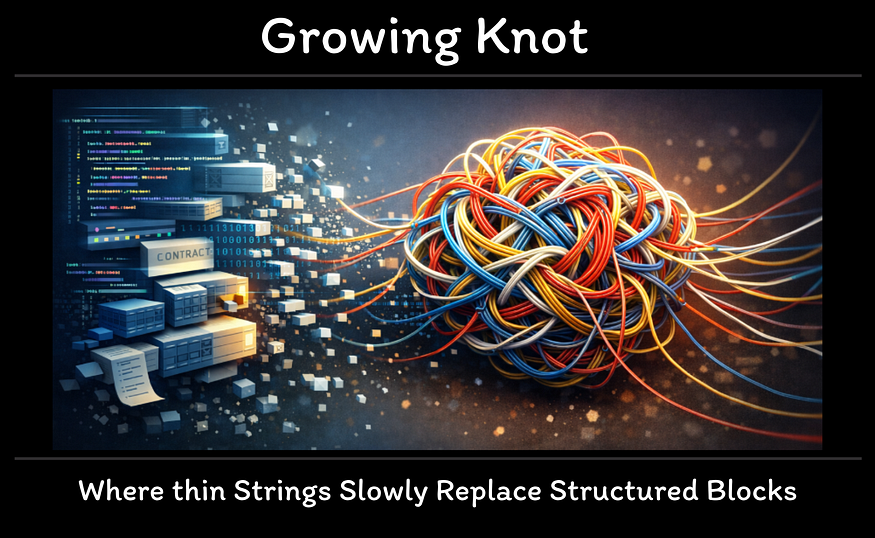
Once conduct goes into a book your reasoning goes out of the window.
🔹 Fine-Tuning Freezes Bad Decisions in Place
Fine-tuning appears to be a sign of maturity.
But in reality, it may simply lock in the confusion.
In case your prompts are not clearly stated, fine-tuning is not a solution. It merely makes the ambiguity part of the weights.
(Now:)
- Debugging is harder.
- Rollbacks take longer.
- And changes are riskier.
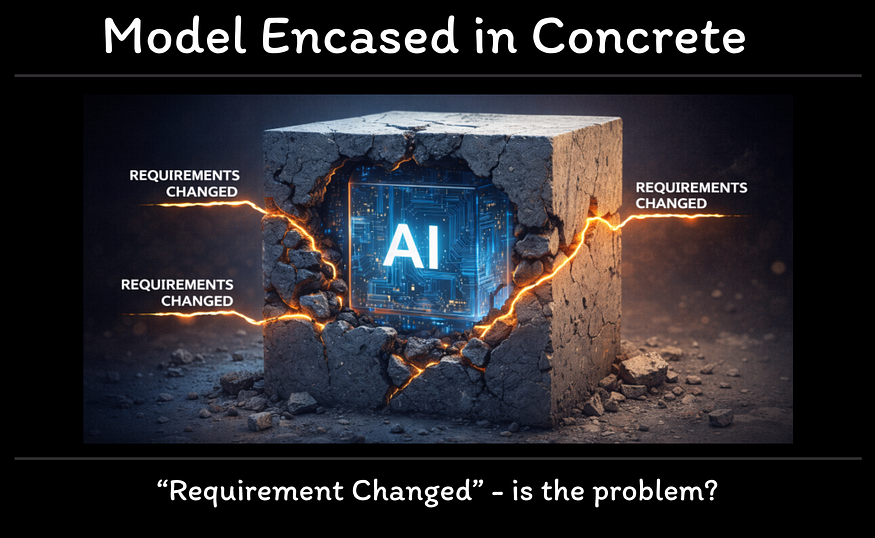
That time, in rectification, I am glad you caught on.
🔹 RAG Forces You to Admit What You Don’t Know
Perhaps the RAG feels like a big weight, but it is precisely that structure which makes it easier to manage.
You will have to make up your mind:
- What is the source of truth?
- What is being altered?
- What should be retrieved and what simply inferred?
The discomfort is worth the value.
RAG takes the intelligence from the prompts and puts it inside the limits of the data.
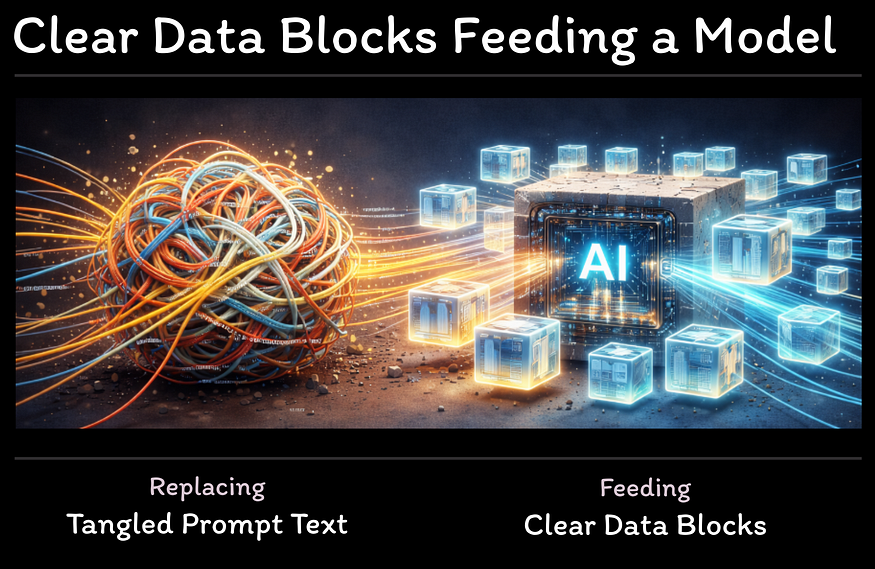
RAG is not more intelligent. It is just more open.
🔹 The Real Issue Is Control
It’s not a matter of instruments.
It’s a matter of the locus of the behaviors.
Press enter or click to view image in full size
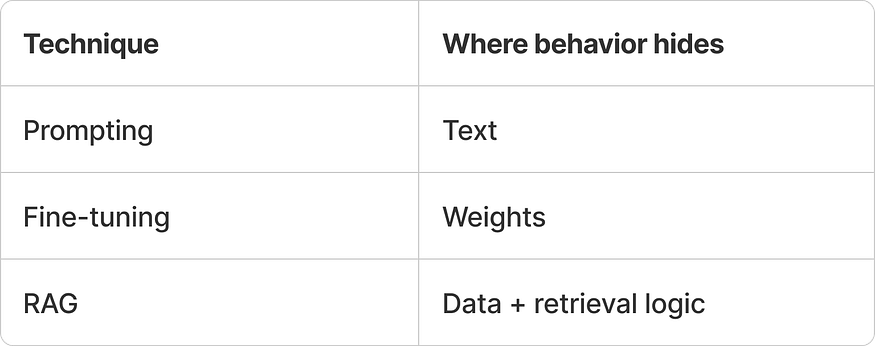
Out of the two, only one can be properly scrutinized when put under stress.

Systems fail there because behavior is implicit.
🔹 Selecting the Incorrect Instrument Generates Unnoticed Liabilities
Prompt engineering leads to change debt.
Fine-tuning leads to lock-in debt.
RAG leads to design debt — and that’s the positive type.
Design debt becomes visible
It’s both payable and reversible.
Some others just bite.
I do not stay away from prompts. I just reduce their number.
RAG is not a source of my fears. The situation of treating structure as a non-compulsory one is the one that I dread.
In case your AI system vanishes the very next day,
would the conducts be recorded somewhere or just kept in memory?
The response to that question indicates what will fail next.
Press enter or click to view image in full size

Thank you for reading! 👏👏👏 Hit the applause button and show your love❤️, and please follow➡️ for a lot more similar content! Let’s keep the good vibes flowing!

More in artificial-intelligence


Cubed
Write about the technologies shaping the future.
For developers, founders, and curious minds exploring AI, crypto, Web3, and emerging tech—signal over noise.
One free account across In Plain English, Stackademic, Venture, and Cubed.
How it works- AI, crypto & Web3
- Software & emerging technologies
- Analysis & practical resources
- Thoughtful voices, not hype
Sign in
Google or GitHub
Complete profile
Takes a few minutes
Get approved & publish
Start sharing
Why write for Cubed?
The future deserves thoughtful voices, not just louder headlines.
Comments
Loading comments…