Regression Vs Neural Networks
2 min readSiddhartha Nimmaturi
Regression:-
Regression finds the relationship between the independent variable and the dependent variable. The outcome variable in the Linear Regression is a numerical value; the outcome variable in the Logistic Regression is a categorical value. We fit the best straight line to get the minimal error.
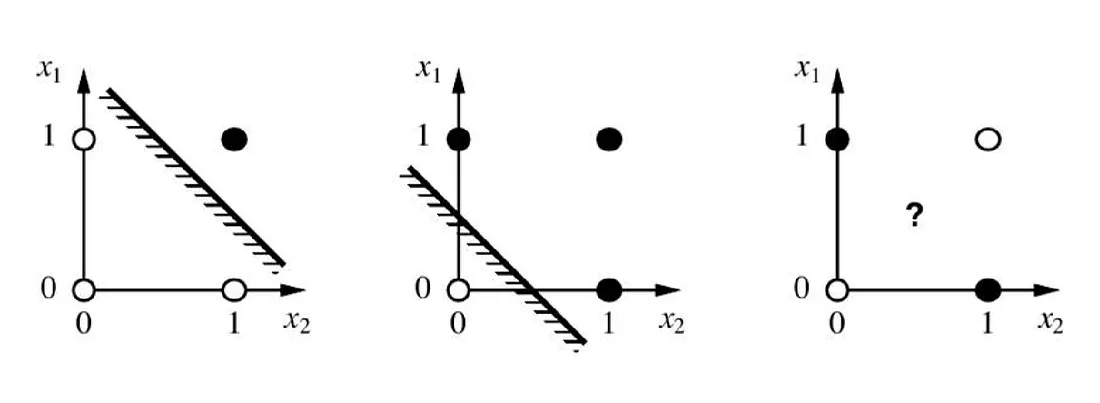
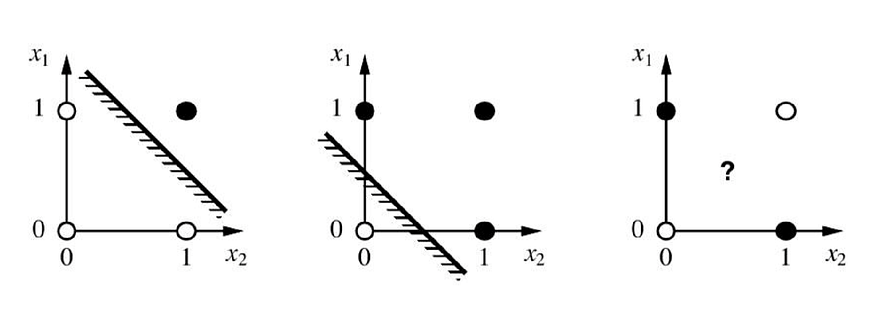
In regression, data can be classified using a straight line, and the same follows for the logistic regression. But, sometimes it's difficult to classify if data is scattered as shown below.
Differentiating Regression Vs NN
Here, from the first two figures, we can say that regression can be used to classify them, and also a straight line can bisect them. Whereas, in the third figure, we cannot divide the data points as it is scattered. So, that’s how the Neural Networks were brought up.
Neural Networks:-
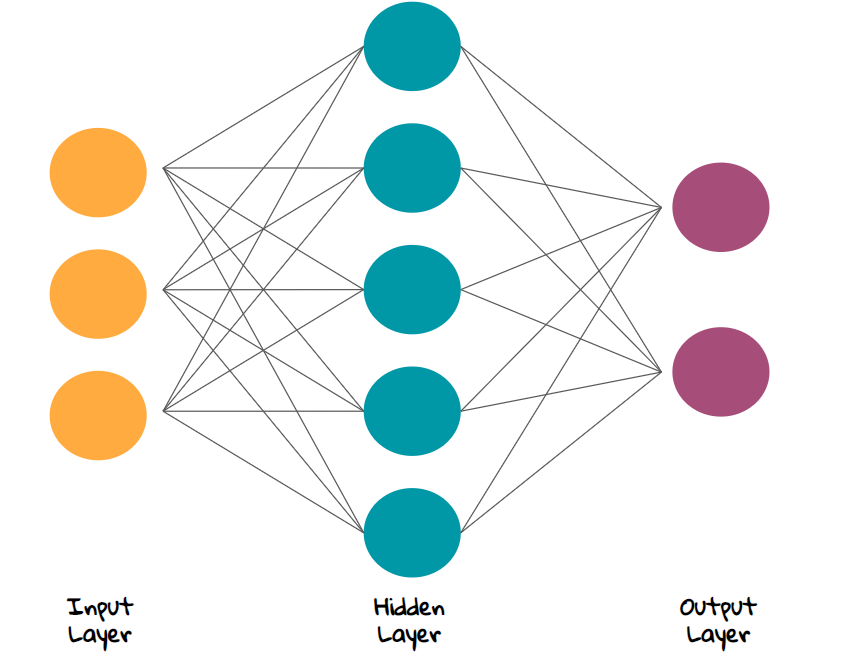
Neural Networks are used when the data is scattered, and it cannot be bisected using a straight line, where it uses circles or ellipses to cluster the common data. Basically, a typical Neural Network looks like this…….
Neural Network
It consists mainly of the Input layer, Hidden layer, and output layer. The efficiency of the Neural Network is higher when the number of hidden layers increases. Like our Human Brain, Neural Networks will also have Neurons also known as perceptrons. In Neural Network, many regression tasks are performed to get an output. The output can be any of the numerical values or categorical values.
Examples:- To predict a dog or a cat from an image. To estimate the price of a flight.
If we have more hidden layers in a Neural Network, then it is known as Deep Learning.
More in machine-learning


Cubed
Write about the technologies shaping the future.
For developers, founders, and curious minds exploring AI, crypto, Web3, and emerging tech—signal over noise.
One free account across In Plain English, Stackademic, Venture, and Cubed.
How it works- AI, crypto & Web3
- Software & emerging technologies
- Analysis & practical resources
- Thoughtful voices, not hype
Sign in
Google or GitHub
Complete profile
Takes a few minutes
Get approved & publish
Start sharing
Why write for Cubed?
The future deserves thoughtful voices, not just louder headlines.

Comments
Loading comments…