Meet SOLARIS®: The First Motorcycle Powered Only by the Sun
Why Rely on the Grid When You Can Use the Sun?
4 min readJeffrey Clos
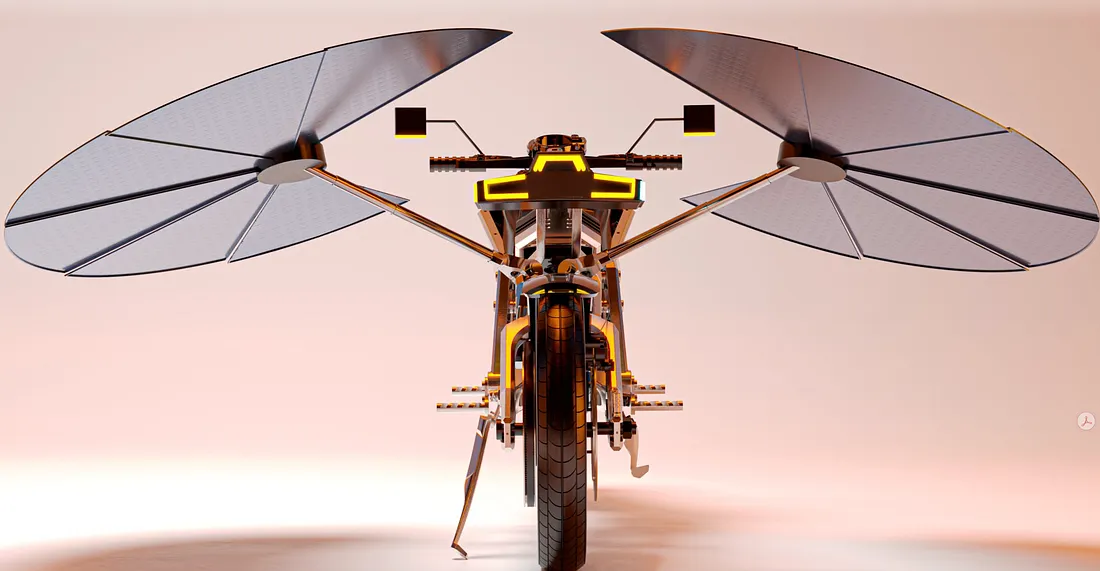

Solaris Solar Motorcycle (media by Mask Architects)
The future of transportation isn’t just electric — it’s independent. For decades, our ability to travel has been tethered to external systems, whether that’s a gas station pump or an electrical grid. But what if your vehicle could generate its own power, anywhere, at any time during the day? Sure, there have been attempts, but this particular means of transportation is aiming higher.
Enter SOLARIS®, the world’s first fully solar-powered autonomous motorcycle. Designed by the visionaries at MASK Architects, this isn’t just a concept vehicle; it’s a bold reimagining of mobility. SOLARIS® challenges the status quo by cutting the cord to traditional infrastructure, offering a glimpse into a future where freedom is powered by the sun.
True Independence on Two Wheels
The current mobility economy is built on dependency. Even the most advanced electric vehicles (EVs) on the market today rely on charging networks. If the grid goes down or you find yourself miles from a charging station, you’re stuck.
SOLARIS® breaks this cycle entirely. It introduces a new model of absolute independence where the user is no longer tied to commercial charging networks or fuel prices. By generating its own energy, this motorcycle offers a radical alternative to the global commercial model that has dominated transportation for over a century.
Whether you are navigating a smart city or exploring a remote region without reliable electricity, SOLARIS® remains a silent, emission-free companion. It transforms the concept of freedom from a marketing metaphor into a technological reality.
How the Solar Technology Works
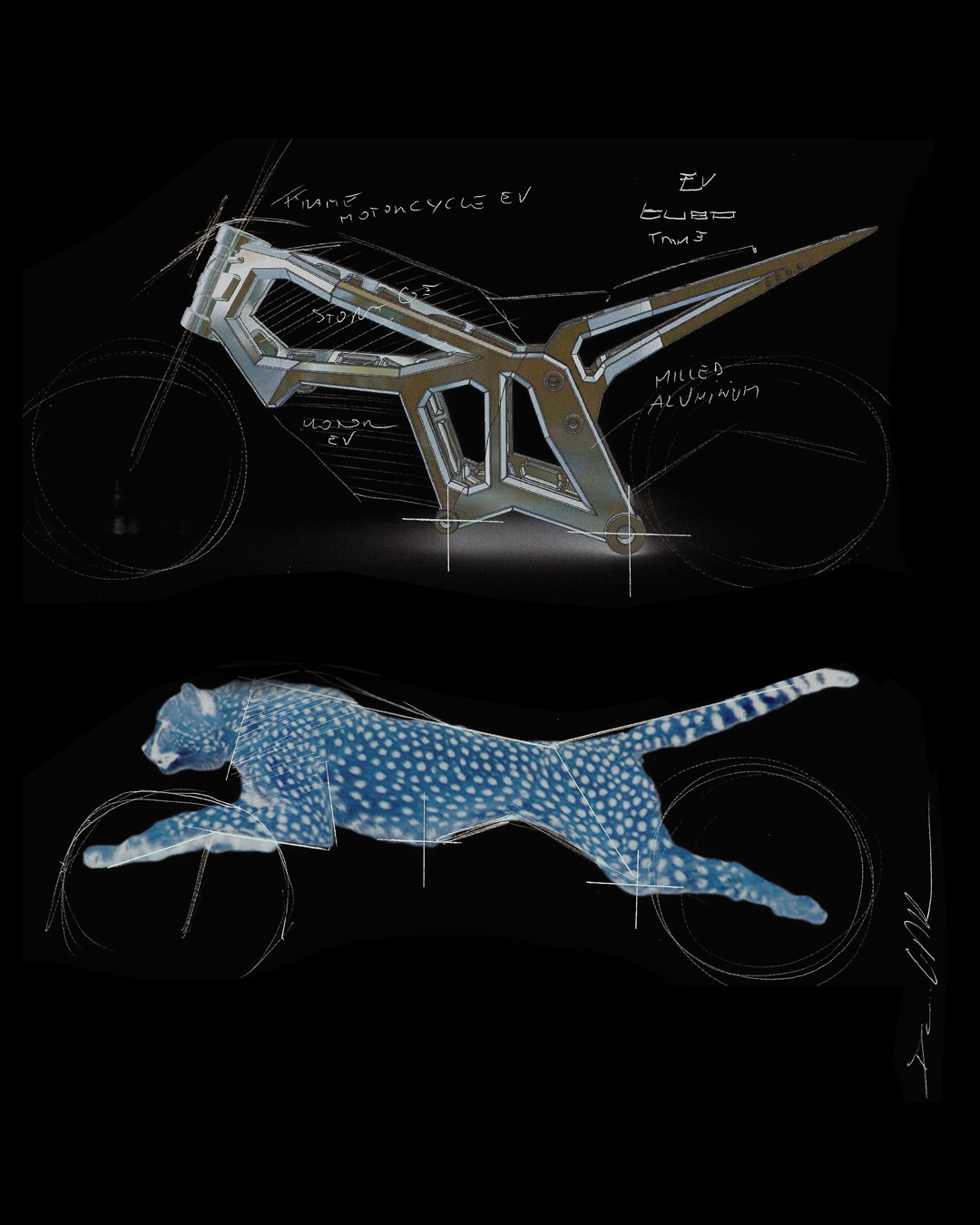
At first glance, the SOLARIS® looks like a creature born from nature, drawing inspiration from the fluid, muscular movement of a sprinting leopard. However, this biomimetic design serves a function far beyond aesthetics.
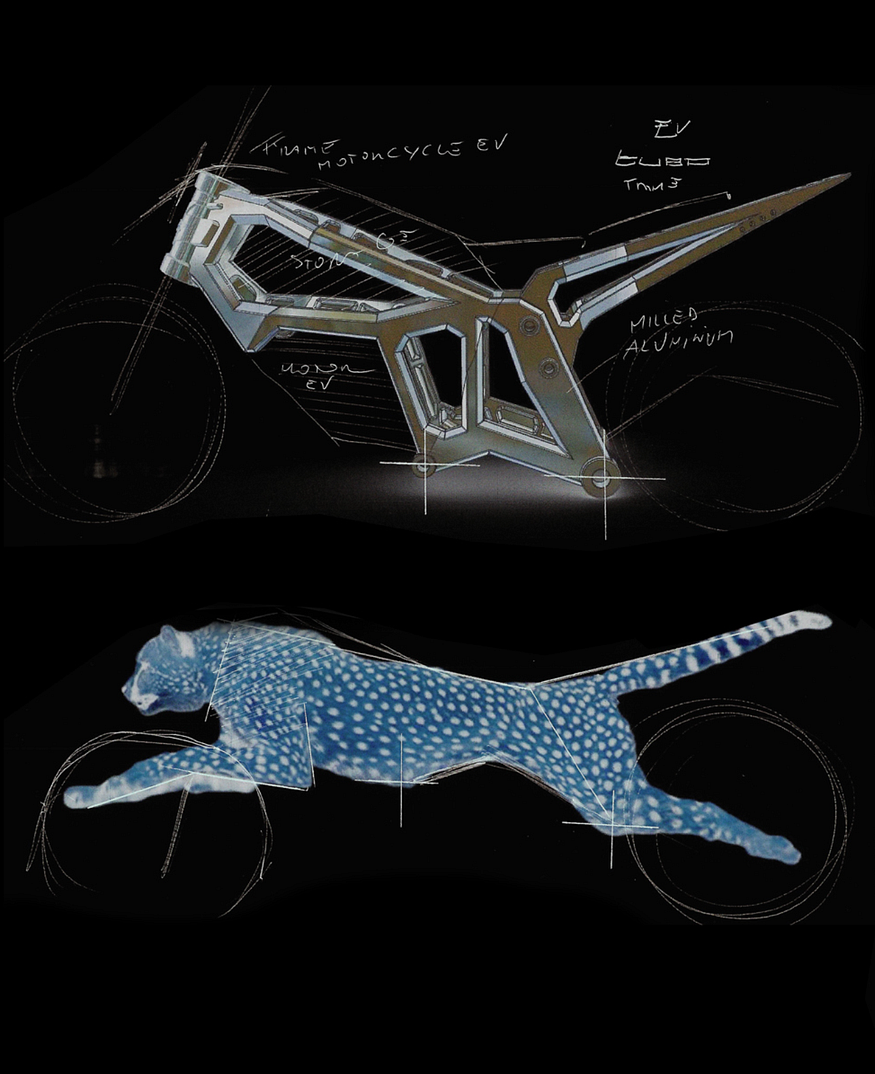
Comparison (media by Mask Architects)
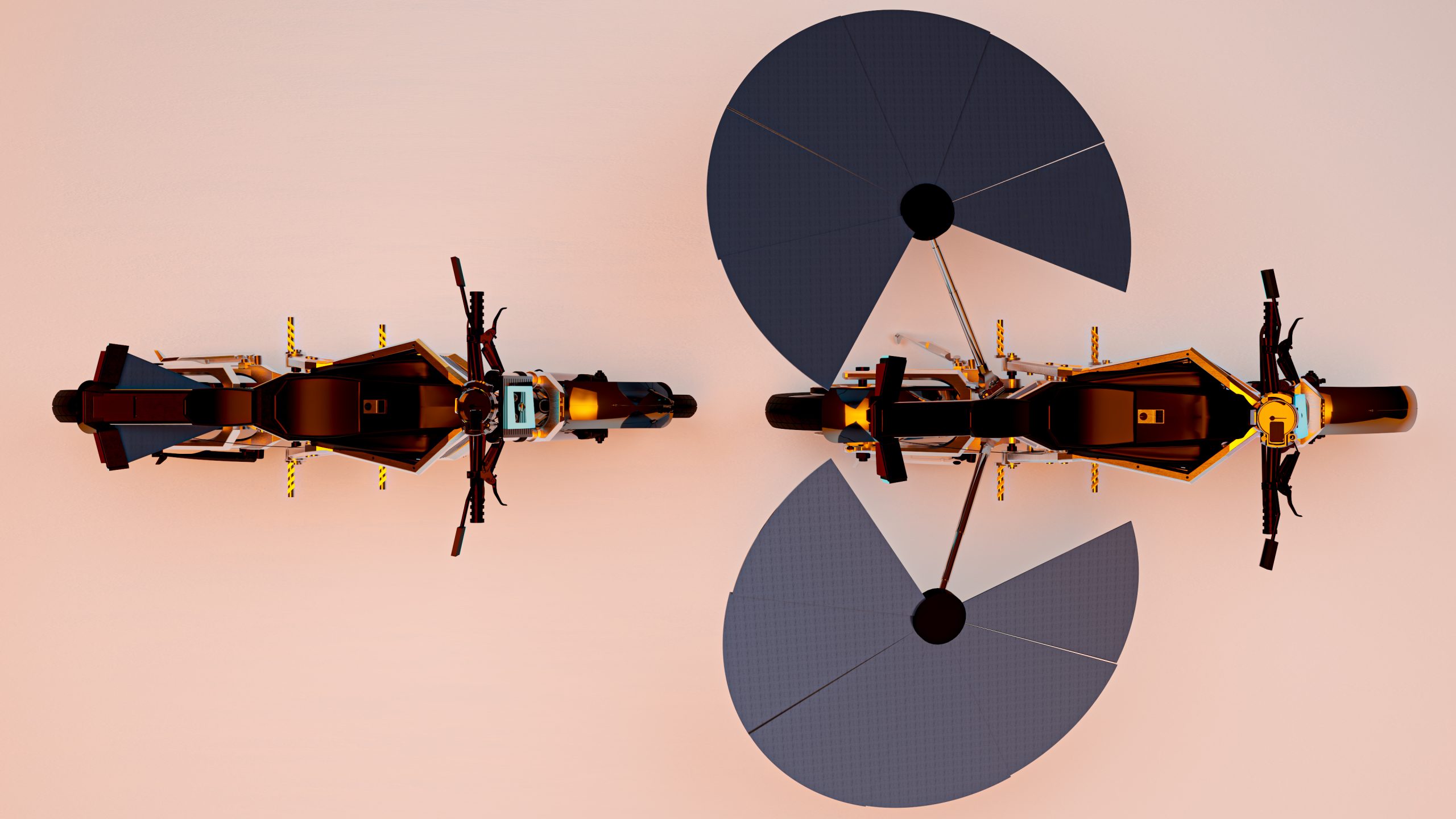
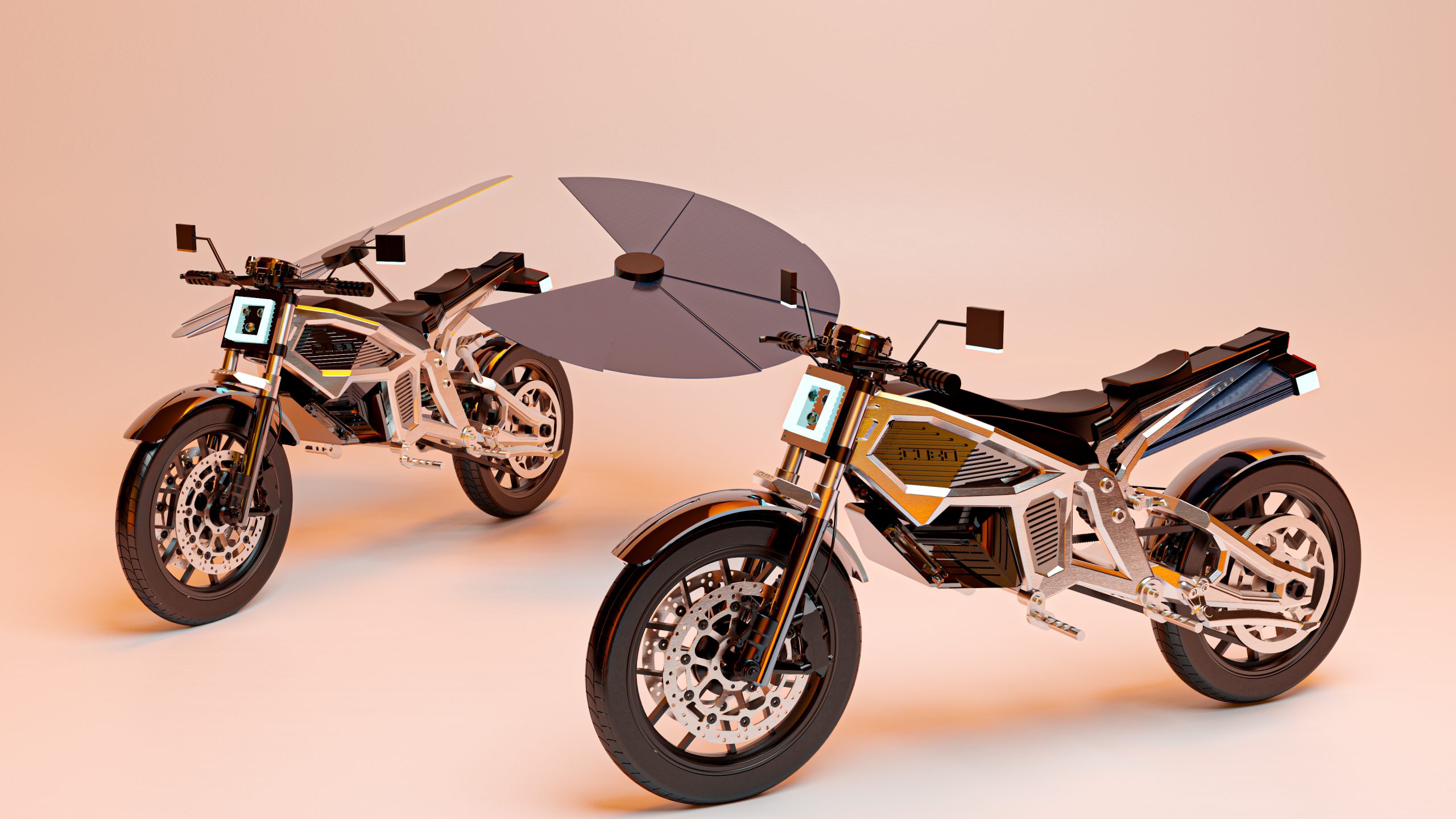
The vehicle operates exclusively through solar intelligence. Its most striking feature is the set of retractable photovoltaic wings. When parked, these wings unfold into a circular solar array that collects, concentrates, and converts sunlight into electrical power. This energy is then stored within a high-capacity lithium system.
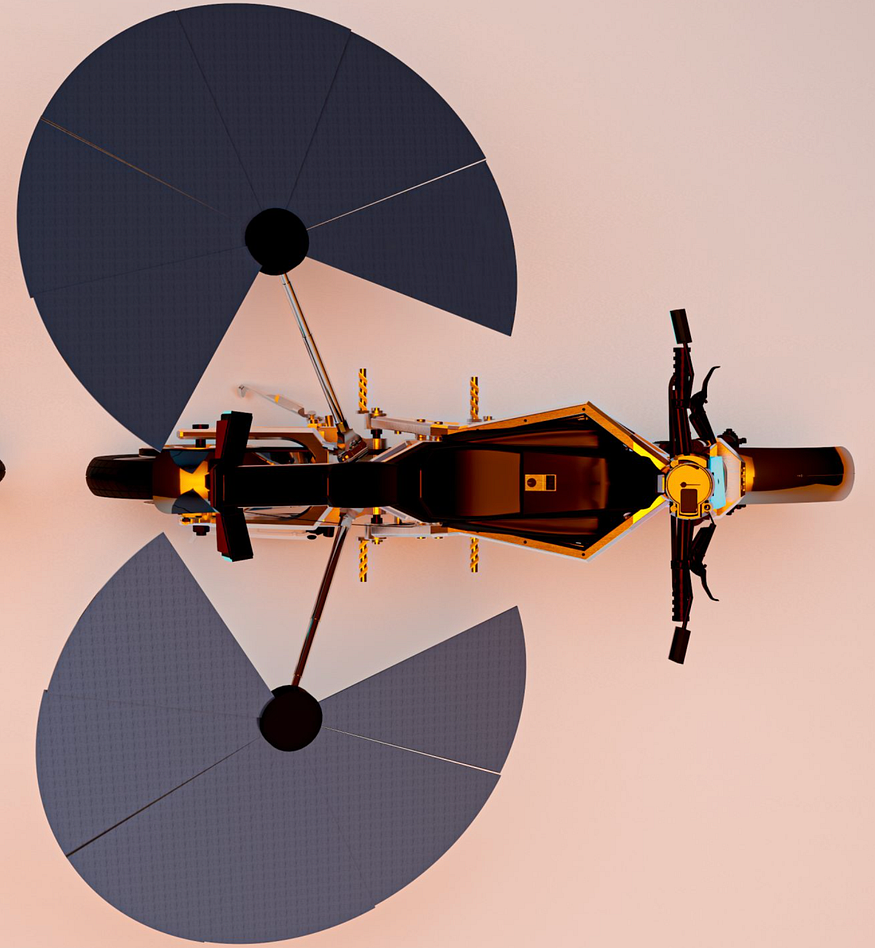
Overhead (media by Mask Architects)
Essentially, when the bike is stationary, it becomes its own charging station. When in motion, it utilizes:
- High-Torque Electric Motor: Delivers instant acceleration for a responsive ride.
- Regenerative Braking: Recovers kinetic energy during stops to maximize range.
- Aluminum–Carbon Composite Chassis: Engineered for strength and agility while keeping the vehicle lightweight.
An intelligent solar-energy management system constantly monitors collection and storage, while a digital cockpit allows riders to track their solar intake in real-time.
A Sustainability Breakthrough
SOLARIS® is more than a vehicle; it is an environmental intervention. By operating exclusively on solar power, it eliminates CO₂ emissions and significantly reduces noise pollution.
This decentralized model of clean mobility is particularly game-changing for areas where infrastructure is fragile or non-existent. SOLARIS® can bring renewable transportation to remote regions, developing communities, and protected natural areas without the need to build intrusive charging stations. It acts as a catalyst for ecological transformation, enabling mobility where it was previously inaccessible.
The Commercial Edge
While the environmental benefits are clear, the economic advantages of the SOLARIS® are equally impressive. For logistics fleets, eco-tourism operators, and smart-city pilot programs, this self-charging motorcycle offers a strong commercial edge.
By eliminating fuel costs and drastically reducing maintenance requirements, ownership costs are significantly lower than conventional combustion or even standard electric motorcycles. This efficiency means the vehicle achieves payback much faster, making it a financially smart choice for businesses and individuals alike.
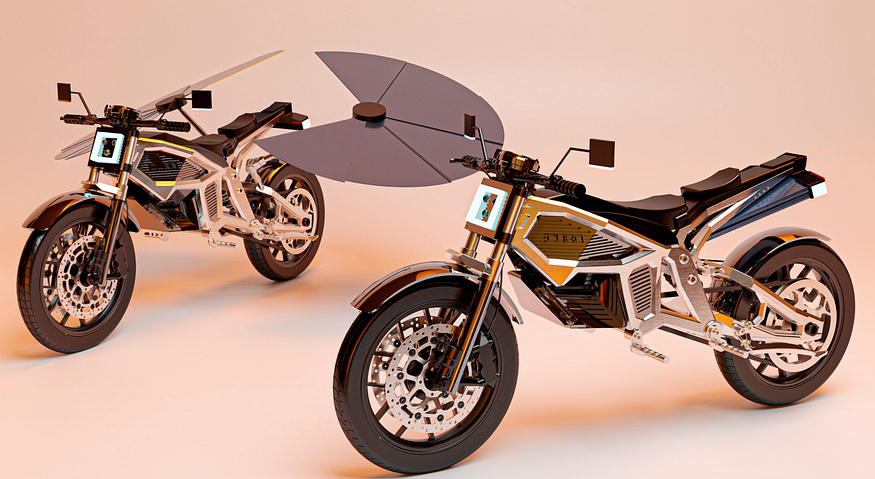
Solaris (media by Mask Architects)
A New Path for Mobility
The SOLARIS® by MASK Architects stands as a declaration of autonomy and human ingenuity. It proves that we don’t need to rely on outdated systems to move forward. By merging visionary creativity with radical technological innovation, SOLARIS® offers a new path toward a world where energy belongs to everyone.
As we look toward a cleaner, more independent future, vehicles like SOLARIS® aren’t just an option — they are the destination.
More in technology

Cubed
Write about the technologies shaping the future.
For developers, founders, and curious minds exploring AI, crypto, Web3, and emerging tech—signal over noise.
One free account across In Plain English, Stackademic, Venture, and Cubed.
How it works- AI, crypto & Web3
- Software & emerging technologies
- Analysis & practical resources
- Thoughtful voices, not hype
Sign in
Google or GitHub
Complete profile
Takes a few minutes
Get approved & publish
Start sharing
Why write for Cubed?
The future deserves thoughtful voices, not just louder headlines.
Frequently Asked Questions
Common questions about this topic
What is SOLARIS®?
SOLARIS® is described as the world’s first fully solar-powered autonomous motorcycle designed by MASK Architects that generates its own energy through onboard solar systems.
How does SOLARIS® achieve energy independence?
SOLARIS® achieves energy independence with retractable photovoltaic wings that unfold when parked into a circular solar array to collect and convert sunlight, storing the energy in a high-capacity lithium system so the vehicle does not rely on external charging networks or fuel.
When and how does SOLARIS® charge its batteries?
SOLARIS® charges its batteries primarily when stationary by unfolding its photovoltaic wings into a circular array that collects, concentrates, and converts sunlight into electrical power for storage in its high-capacity lithium system.
What propulsion and energy-recovery systems are integrated into SOLARIS®?
SOLARIS® uses a high-torque electric motor for instant acceleration and regenerative braking to recover kinetic energy during stops, complementing its solar charging and stored energy to extend range.
What materials comprise the SOLARIS® chassis and why?
The SOLARIS® chassis is an aluminum–carbon composite engineered to provide strength and agility while keeping the vehicle lightweight.
What onboard systems manage solar energy and user information?
An intelligent solar-energy management system constantly monitors energy collection and storage, and a digital cockpit allows riders to track solar intake in real time.
What environmental benefits does SOLARIS® claim?
SOLARIS® operates exclusively on solar power, eliminating CO₂ emissions and significantly reducing noise pollution while enabling decentralized clean mobility in areas with fragile or no infrastructure.
How is SOLARIS® positioned commercially?
SOLARIS® is positioned as a commercially advantageous vehicle for logistics fleets, eco-tourism operators, and smart-city pilot programs by eliminating fuel costs, reducing maintenance requirements, lowering ownership costs, and achieving faster payback compared with conventional combustion and standard electric motorcycles.
In what contexts is SOLARIS® said to be particularly transformative?
SOLARIS® is described as especially transformative for remote regions, developing communities, and protected natural areas because it can provide renewable transportation without building intrusive charging infrastructure.
What inspired the design of SOLARIS®?
The design of SOLARIS® is biomimetic and draws inspiration from the fluid, muscular movement of a sprinting leopard, with form serving functional aspects of the vehicle.

Comments
Loading comments…