Machine Learning Made Simple: AI Starts Here
Learning patterns, not magic
4 min readNagaraj
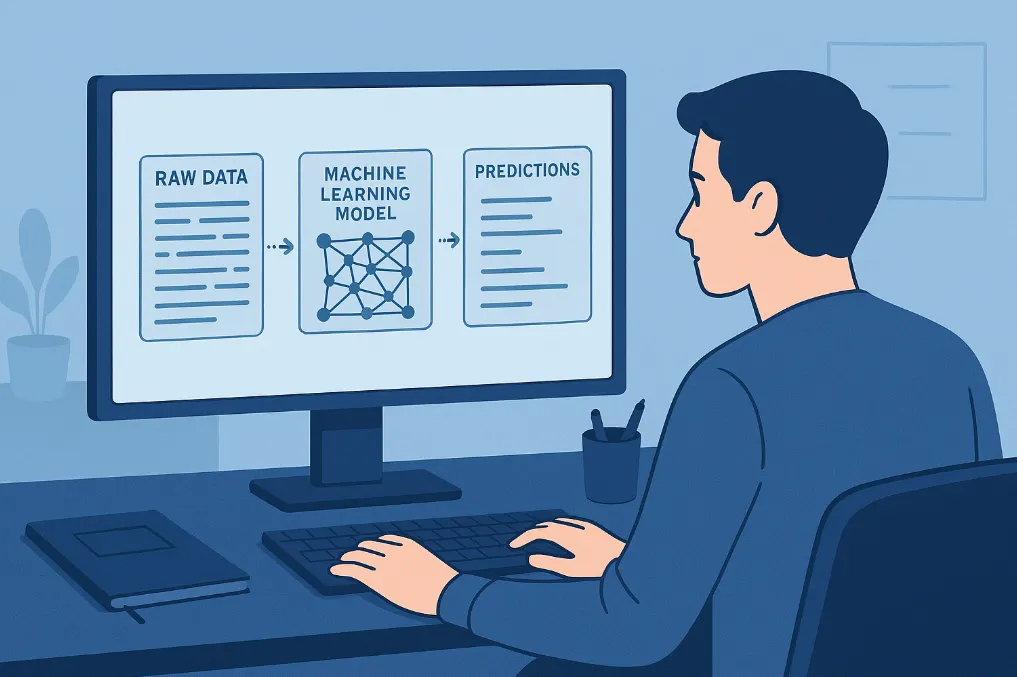
Did you ever experience the sensation of being dumb just by reading about AI — like the rest of the people “understand it” and you do not?
I have felt that way too. Tiring late nights. Unfinished articles. Buzzwords scattered all over. And a secret thought that you don’t share with anyone: “Why is it so hard to understand this that it feels like I should not really be having this problem at all?”
Here is the truth that turned things around for me: Machine learning is not a magical process. It is a process of practicing. Repeating. Receiving feedback.
As soon as that made sense, AI ceased to be a scary thing and turned out to be a rational one.
Let us take the matter down to the very essence. No exaggeration. No padding. Only clarity.
🤖 Machine Learning, Without the Noise
Machine learning is about machines “thinking.” Rather, it pertains to systems learning patterns from data and improving through experience.
At its heart:
- Inputs are fed
- Patterns are acquired
- Outputs improve progressively
No rules are hardcoded. No if-else meltdown.
This was the moment I stopped memorizing definitions and began comprehending behavior.
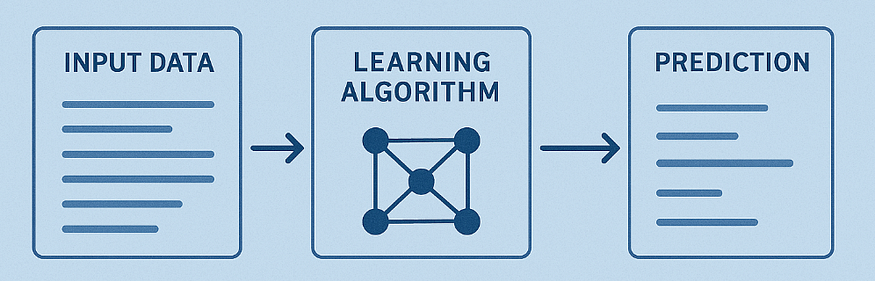
In other words, machine learning supplants instructions with examples.
🧠 How Machines Actually Learn
Picture a student getting ready for an exam.
- The student works out on examples
- Commits errors
- Modifies
- Gets better
A machine learning algorithm does the same thing.
The student is the algorithm. The data scientist is the one who teaches. The dataset is the reading material.
The most important thing is not genius but exposure.
I had to experience this personally after making a very complicated model that couldn’t succeed…due to the poor quality of the data.
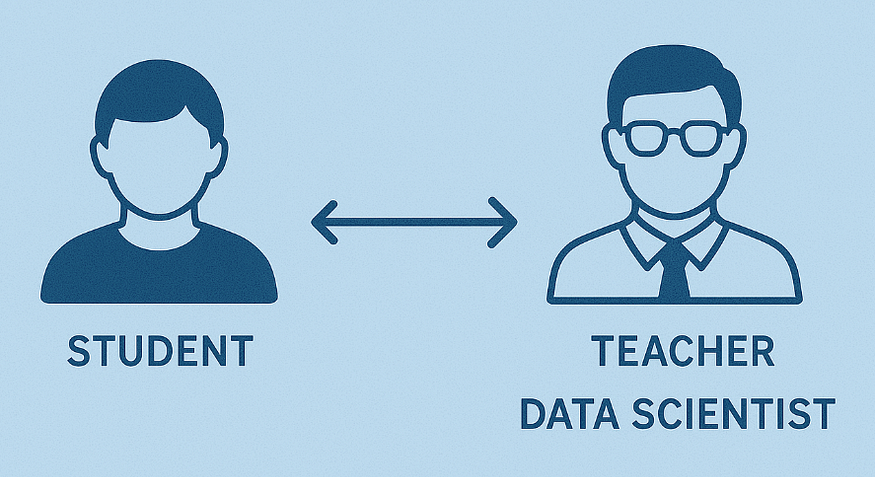
Analogically speaking, student ↔ teacher: model ↔ data scientist.
A straightforward model with quality data win over a model that is complicated with bad data.
🧩Types of Machine Learning That Matter
You do not require all of them. Only the correct one is needed.
Supervised Learning
- Gets knowledge from labeled data
- Both input and expected output are known
Unsupervised Learning
- Extracts structure from unlabeled data
- Finds out patterns, clusters, relationships
Reinforcement Learning
- Experiences learning through trial and error
- Rewards or penalties are the feedback
The majority of real-world issues begin with supervised learning. So did mine.
The model selection is not important as much as the right learning approach selection.
🧪 A Practical Demo: Predicting with Data
Let’s make this real.
Imagine predicting house prices based on past data.
Inputs:
- Size
- Number of rooms
- Location
Output:
- Price
This is classic supervised learning.
Simple Python Example
requirements :
scikit-learn>=1.0
numpy
scipy
try:
 from sklearn.linear_model import LinearRegression
except Exception as e:
 raise SystemExit('For scikit-learn, and it is to be installed as follows: pip install -r requirements.txt') from e

# Training data
X = [[1000], [1500], [2000], [2500]]  # house sizes
y = [150000, 200000, 250000, 300000]  # prices

# Train model
model = LinearRegression()
model.fit(X, y)

# Predict
predicted_price = model.predict([[1800]])
print(predicted_price)
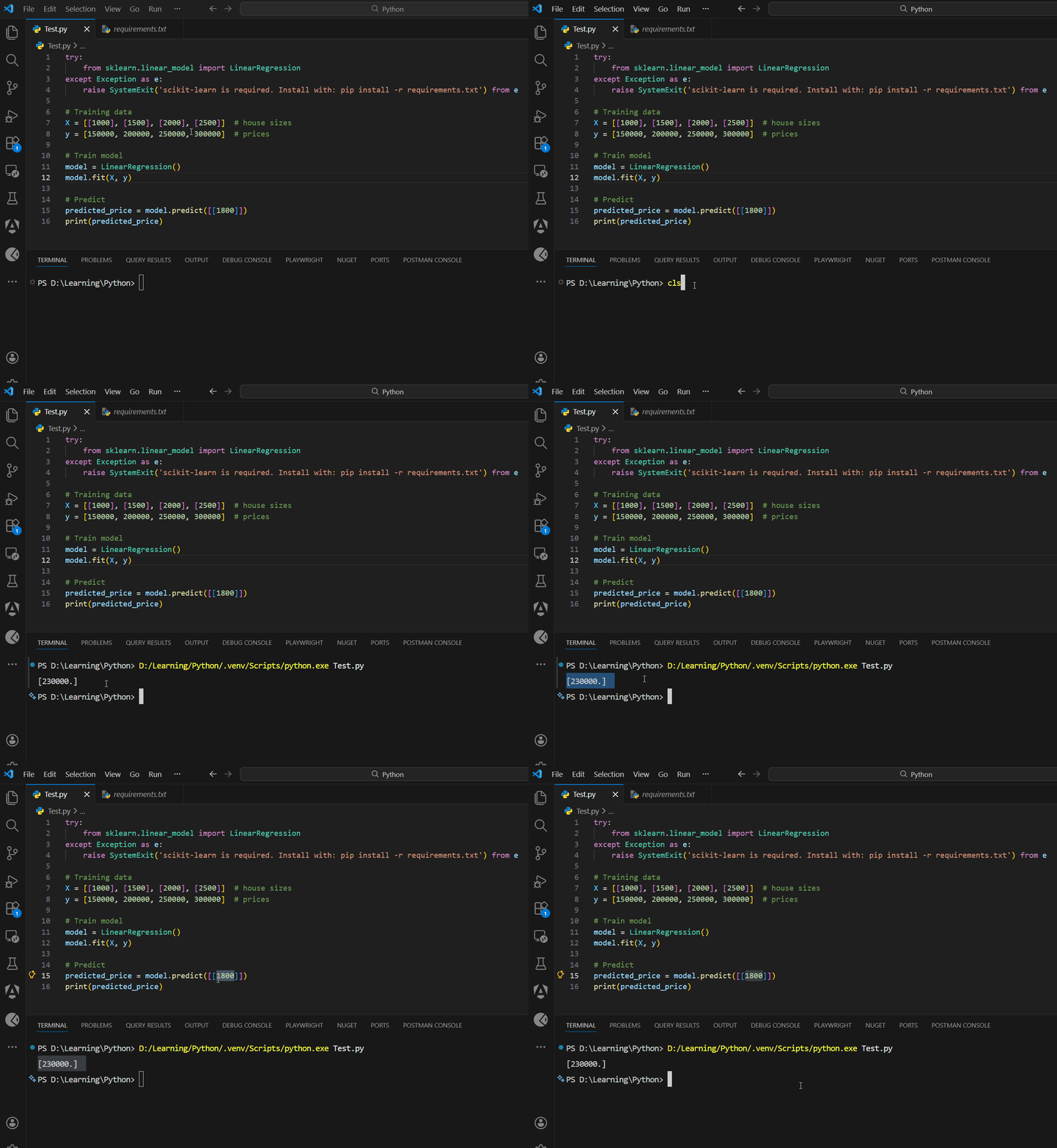
What is going on in this situation:
- The system analyzes historical samples
- Infers the link between dimensions and value
- Makes forecasts for fresh, unobserved data
There is no sorcery — only recognition of patterns.
A model does not make a prediction — it does a comparison.
📊 Why Data Beats Complexity Every Time
This lesson was painful — but it remained with me.
At one point, I thought:
- More layers = a more intelligent model
- More math = superior outcomes
But I was taught against my assumption.
Machine learning performance is mostly determined by:
- The caliber of the data
- The relevance of the data
- The recency of the data
A small, clean dataset can still be more powerful than huge noisy data.
That awareness was the turning point in my current AI problem-solving ability.
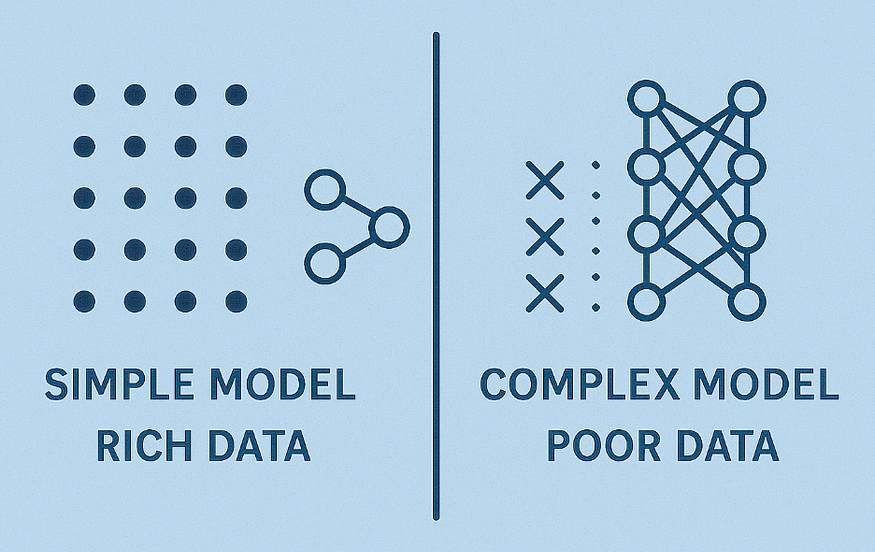
The power of better data is quicker than that of better algorithms in improving the models.
🧠 Continuous Learning Is the Real Power
The changes in the world around us are the reason why models continue learning.
To be more specific, the new data:
- Refines predictions
- Reduces bias
- Improves accuracy
Machine learning systems therefore age badly without updates and the need for ongoing learning is no longer a matter of choice but of survival.
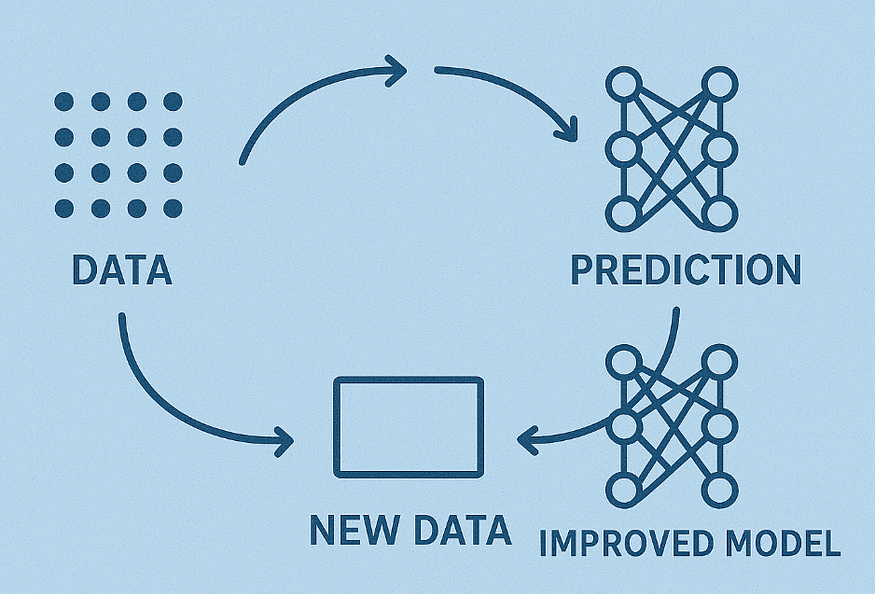
One-time learning is enough for software; continuous learning is a process that eventually grants you intelligence.
🎯 The Bottom Line
Your struggle with AI is not due to lack of ability on your part. Instead, it is because the majority of the clarifications do not touch the basics.
Artificial Intelligence or machine learning at the very beginning is very basic. And when you have a good grasp of it, everything else will come up clearly and naturally.
Genius is not a requirement. What you need is just the proper mental model and quality data.
That is the exact point where AI begins.
Thank you for reading!
More in machine-learning


Cubed
Write about the technologies shaping the future.
For developers, founders, and curious minds exploring AI, crypto, Web3, and emerging tech—signal over noise.
One free account across In Plain English, Stackademic, Venture, and Cubed.
How it works- AI, crypto & Web3
- Software & emerging technologies
- Analysis & practical resources
- Thoughtful voices, not hype
Sign in
Google or GitHub
Complete profile
Takes a few minutes
Get approved & publish
Start sharing
Why write for Cubed?
The future deserves thoughtful voices, not just louder headlines.

Comments
Loading comments…