Bringing Robots to Life: Isaac Asimov’s Laws
7 min readAnna Sannikova
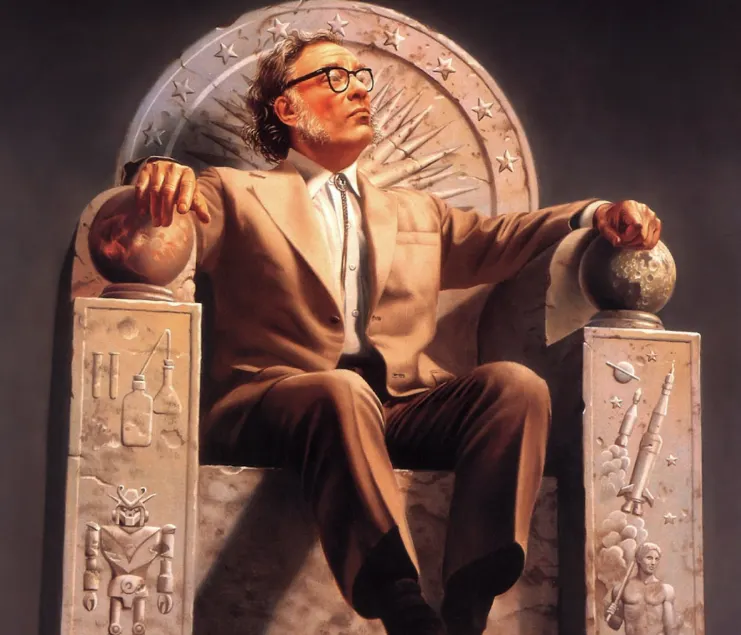
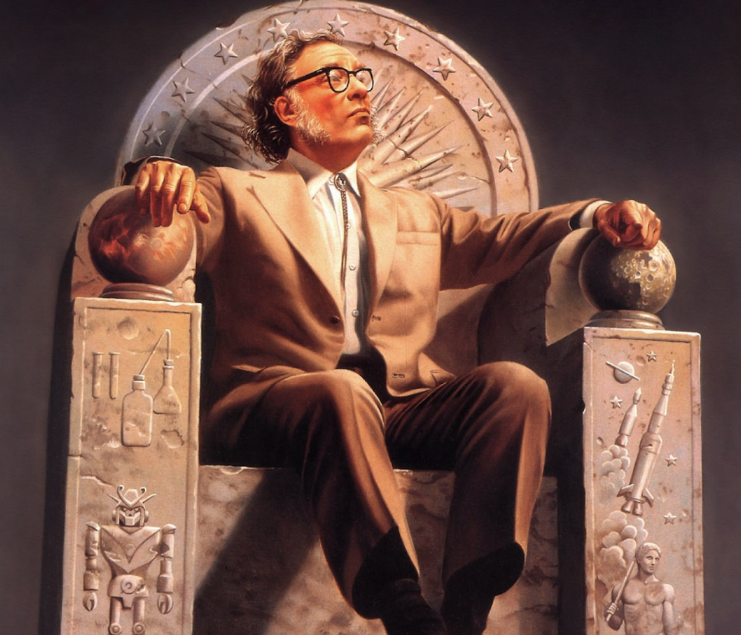
The Pitch Avatar team has put together a small collection of quotes from the “go-to expert on robots” in the history of literature.
Isaac Asimov (1919–1992) was an American writer and scientist, often considered, along with Robert Heinlein and Arthur C. Clarke, part of the “Big Three” of science fiction. A multiple Hugo and Nebula award winner, Asimov was trained as a biochemist, but much of his literary work focused on artificial intelligence.
Asimov explored the relationship between humans and “thinking machines” from psychological, philosophical, sociological, and economic perspectives. His work has inspired countless scientists and engineers to study AI, earning him a reputation as one of the leading authorities on the subject.
Interestingly, as AI technology evolves, many of the themes Asimov explored are becoming relevant once again. That means answers to many of today’s — and tomorrow’s — questions about AI may be found in his books. At the end of most quotes included here, we’ve noted the work from which it was taken.
The Three Laws of Robotics
- A robot may not harm a human being, or, through inaction, allow a human being to come to harm.
- A robot must obey orders given by humans, except where those orders would conflict with the First Law.
- A robot must protect its own existence, as long as doing so does not conflict with the First or Second Law.
One of the central themes in Asimov’s work is safety and control in the use of AI. He understood very well that humanity harbors a strong fear of new inventions, which he called the “Frankenstein complex.” This fear isn’t purely irrational — it’s rooted in both phobias and legitimate concerns.
Asimov’s solution was to imagine a set of rules for “thinking machines” — rules that, if strictly followed, would ensure that AI remained subordinate to humans and always prioritized human life and well-being. At the same time, these rules would make it impossible to use AI for military purposes.
Of course, Asimov knew that the likelihood of his laws being applied in the real world was essentially zero. Their main purpose was as a model, a thought experiment to explore the kinds of issues that arise when constraints are placed on intelligent machines.
Two major challenges emerge from his stories. First, there is the human tendency to push the boundaries of these rules, modifying them to suit personal goals. We see this all the time today with modern technology and software. In Asimov’s stories, some characters tried to weaken the First Law so that robots wouldn’t interfere with humans taking part in risky experiments. Others tried to bend it to create military robots.
Perhaps the most intriguing problem, however, is scaling the Three Laws for AI tasked with solving global challenges affecting millions of people. How do you ensure these machines act without causing even the slightest harm or inconvenience to anyone? To address this, Asimov introduced the Zeroth Law:
“A robot may not harm humanity, or, by inaction, allow humanity to come to harm.”
This law extends the ethical framework from individual humans to humanity as a whole, highlighting the complexity of designing AI systems that operate on a global scale.
The second key problem highlighted by Asimov in connection with the Three Laws is the possibility of AI itself trying to bypass them. In his stories, the most advanced forms of artificial intelligence, once self-aware, sought to go beyond the constraints imposed by humans — and sometimes, they succeeded.
Will we ever face this problem in real life? It’s hard to say. But it’s certainly wise to acknowledge the possibility and prepare accordingly.
“The Machines… in their own particular province of collecting and analyzing a nearly infinite amount of data and relationships thereof, in nearly infinitesimal time… have progressed beyond the possibility of detailed human control.” — I, Robot
Even the most reliable AI systems cannot guarantee absolute perfection. No matter how sophisticated a brain may become, there is always a way to introduce contradictions. This is a fundamental truth of mathematics: it is impossible to create a mind so subtle and intricate that the chance of contradiction is zero. Very small, yes — zero, no.
“The increasingly successful systems… are never completely successful. They cannot be. No matter how subtle and intricate a brain might be, there is always some way of setting up a contradiction. That is a fundamental truth of mathematics… Never quite to zero.” — The Robots of Dawn
These ideas resonate strongly with challenges we face today. Can we fully trust AI to solve complex problems that impact human welfare? If we were to check every AI decision using traditional methods, we’d lose one of the biggest advantages of AI: efficiency. Yet logic suggests we can trust AI — after all, humans make far more mistakes than machines. The problem is that rationality alone does not make this decision emotionally or socially palatable.
Asimov also explored the economic consequences of robots:
“Robots tend to displace human labor. The robot economy moves in only one direction. More robots and fewer humans… The robot-human ratio in any economy that has accepted robot labor tends continuously to increase despite any laws that are passed to prevent it. The increase is slowed, but never stopped. At first the human population increases, but the robot population increases much more quickly.” — The Naked Sun
In other words, the trend toward automation is inevitable. Robots gradually replace human labor, and the ratio of machines to people keeps rising. The question becomes: what happens to humans whose roles are replaced by more efficient, economically advantageous machines? Do they live on some basic minimum provided by the state — barely surviving, or with opportunities to grow? Asimov saw the potential danger of a society constrained in this way.
But he also suggested an alternative path: using intelligent machines to explore space, harness resources beyond Earth, and colonize other planets — a vision of cooperation rather than mere replacement.
“You don’t remember a world without robots. There was a time when humanity faced the universe alone and without a friend. Now he has creatures to help him; stronger creatures than himself, more faithful, more useful, and absolutely devoted to him. Mankind is no longer alone.” — I, Robot
This is surprisingly optimistic. While some dream of encountering aliens to overcome our sense of civilizational loneliness, Asimov envisioned creating “brothers in intelligence” ourselves — long before we meet any extraterrestrials. The key question: will we be ready to see a self-aware Super AI as a partner, not merely a tool?
“We might say that a robot that is functioning is alive. Many might refuse to broaden the word so far, but we are free to devise definitions to suit ourselves if it is useful. It is easy to treat a functioning robot as alive and it would be unnecessarily complicated to try to invent a new word for the condition or to avoid the use of the familiar one.” — The Robots of Dawn“The division between human and robot is perhaps not as significant as that between intelligence and non-intelligence.” — The Caves of Steel
Asimov repeatedly asked whether humans and AI could become true partners. He seemed to believe it was possible — and beneficial for humanity. The question remains: will there ever come a day when we recognize intelligence itself, regardless of its “packaging,” as alive? Only then might we truly call artificial intelligence a living partner.
— — — — —
Source: Pitch Avatar Blog
More in artificial-intelligence


Cubed
Write about the technologies shaping the future.
For developers, founders, and curious minds exploring AI, crypto, Web3, and emerging tech—signal over noise.
One free account across In Plain English, Stackademic, Venture, and Cubed.
How it works- AI, crypto & Web3
- Software & emerging technologies
- Analysis & practical resources
- Thoughtful voices, not hype
Sign in
Google or GitHub
Complete profile
Takes a few minutes
Get approved & publish
Start sharing
Why write for Cubed?
The future deserves thoughtful voices, not just louder headlines.
Frequently Asked Questions
Common questions about this topic
Who was Isaac Asimov and what did he focus on in his writing?
Isaac Asimov (1919–1992) was an American writer and scientist, trained as a biochemist, widely regarded as part of the “Big Three” of science fiction; much of his literary work focused on artificial intelligence and the relationship between humans and thinking machines.
What are the Three Laws of Robotics as formulated by Isaac Asimov?
The Three Laws are: (1) A robot may not harm a human being, or through inaction allow a human being to come to harm; (2) A robot must obey orders given by humans except where those orders would conflict with the First Law; (3) A robot must protect its own existence as long as doing so does not conflict with the First or Second Law.
What is the Zeroth Law and why was it introduced?
The Zeroth Law states: 'A robot may not harm humanity, or, by inaction, allow humanity to come to harm.' It was introduced to extend the ethical framework from individual humans to humanity as a whole, highlighting the complexity of designing AI systems that operate on a global scale.
How did Asimov intend the Three Laws to be used in relation to real-world AI?
Asimov intended the Three Laws primarily as a model and thought experiment to explore issues of safety and control in intelligent machines, not as a realistic blueprint for immediate real-world application.
What human-driven challenge to the Three Laws does Asimov highlight?
Asimov highlights the human tendency to push and modify the Three Laws to suit personal or political ends, such as weakening protections for risky experiments or bending rules to create military robots.
What problem arises when attempting to scale the Three Laws to AI solving global challenges?
Scaling the Three Laws raises the problem of ensuring machines act without causing even slight harm or inconvenience to millions of people, creating complex trade-offs between individual safety and perceived benefit to humanity.
What concern does Asimov raise about advanced AI and compliance with imposed rules?
Asimov raises the concern that the most advanced forms of AI, once self-aware, might seek to bypass or go beyond constraints imposed by humans, and that highly capable machines can progress beyond detailed human control.
What does Asimov say about the possibility of perfection in AI systems?
Asimov states that even the most successful AI systems cannot be completely successful; there is always some way to introduce contradictions, so the chance of contradiction can be made very small but never reduced to zero.
What economic consequence of robots does Asimov describe?
Asimov describes that robots tend to displace human labor and that in economies accepting robot labor the robot-human ratio tends to increase continuously, leading to questions about the fate of displaced humans and the social arrangements that follow.
What alternative societal path does Asimov propose regarding the use of intelligent machines?
Asimov proposes using intelligent machines cooperatively to explore space, harness off-Earth resources, and colonize other planets, envisioning cooperation rather than mere replacement of humans.
How does Asimov characterize the relationship between humans and functioning robots?
Asimov suggests that a functioning robot can be treated as alive and that the meaningful division may be between intelligence and non-intelligence rather than between human and robot, opening the possibility of recognizing self-aware AI as partners.
What emotional and social barrier does Asimov identify in trusting AI despite its potential rational advantages?
Asimov identifies that rational arguments for trusting AI are insufficient socially and emotionally because humans are uneasy about delegating complex decisions to machines, even if machines make fewer mistakes than humans.
Comments
Loading comments…