More Than Half of Bitcoin Supply Is Underwater as $59,000 Sparks a Bottom Debate
On-chain loss metrics exceed 2022 levels while Polymarket odds and ETF psychology keep bears cautious about calling a cycle low.
7 min read

Fifty-nine thousand dollars and a heavy ledger
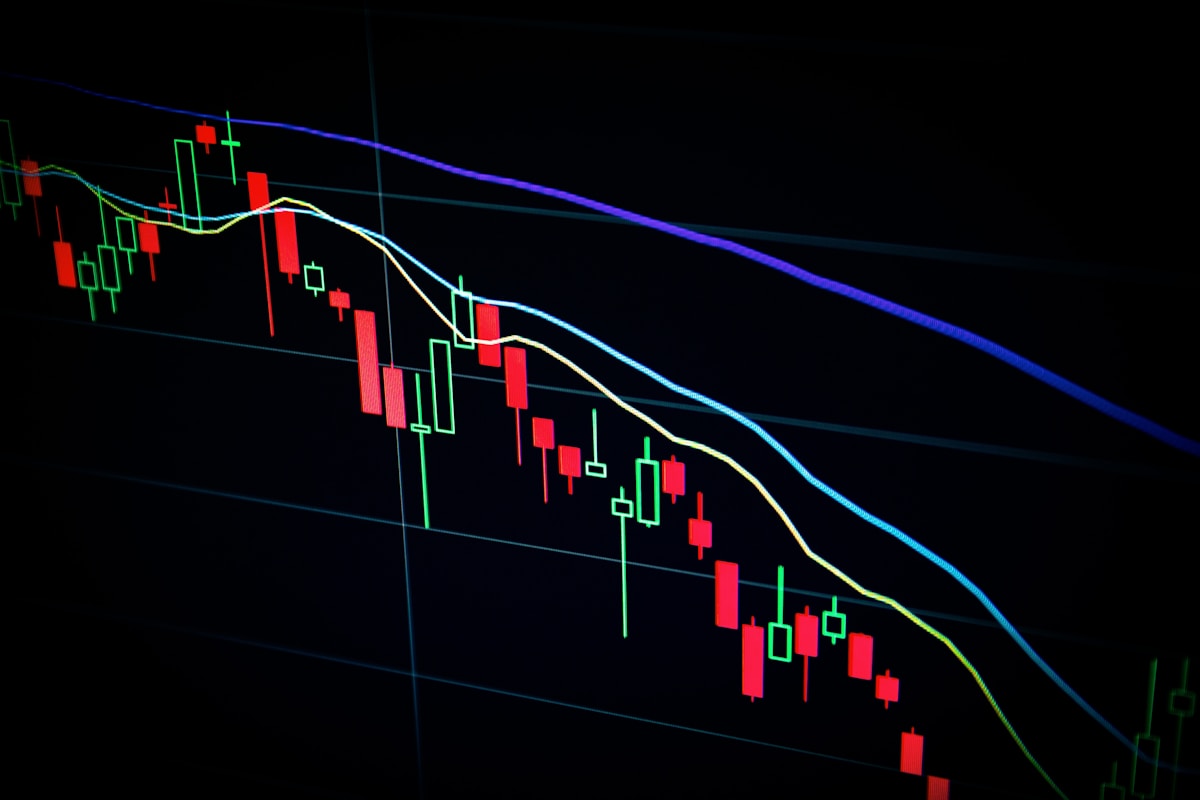
Bitcoin traded near $59,000 on November 29, 2026, a price that feels familiar to anyone who lived through prior cycles yet carries fresh statistical weight. It is high enough to make early adopters wealthy on paper; low enough to place a vast slice of recently acquired supply underwater. That tension—between long-term conviction and short-term pain—has reopened one of crypto’s oldest arguments: whether the market is carving out a durable bottom or merely pausing before another leg down.
Price alone rarely settles the debate. Analysts this weekend leaned on cost-basis data, derivatives positioning, and cross-asset correlations to argue both sides. What unified most commentary was acknowledgment that sentiment has decoupled from network fundamentals in the short run: hash rate remains robust, spot ETF machinery still processes daily flows, and sovereign-adjacent narratives continue to circulate in policy circles. None of that has prevented spot from drifting into a band where psychology turns punitive for marginal buyers.
Eleven point one million coins at a loss
CryptoQuant metrics widely circulated on November 29 estimate that roughly 11.1 million BTC—more than half of circulating supply by most tabulations of liquid coins—sit at a loss relative to their on-chain acquisition price. The figure is not merely a discomfort index; it maps directly onto spending behavior, tax-loss harvesting incentives, and the probability that distressed holders capitulate into bids.
When such a large fraction of supply is underwater, rallies face overhead supply walls as participants seek breakeven exits. Conversely, deep unrealized losses can also foreshadow seller exhaustion if the weakest hands have already exited. Quant shops model these dynamics with realized cap and NUPL variants; the headline 11.1M BTC is the retail-facing distillation that trended across research newsletters and trading desks this weekend.
Comparisons to 2022 arrived almost automatically. That year’s bear market famously drove long stretches where a majority of supply traded below cost basis, culminating in exchange failures and miner capitulation headlines. Spot bottomed in a chaos of contagion rather than an orderly valuation anchor. Observers drawing parallels note similar macro headwinds—tight financial conditions, geopolitical flare-ups, and episodic crypto-specific shocks—while cautioning that structure differs: regulated ETF channels, more institutionally distributed ownership, and a maturing derivatives market that can absorb shocks differently.
Still, human memory rhymes. Social feeds revived screenshots of 2022 despair posts next to 2026 charts, asking whether $59k is the new psychological Maginot line or a mid-elevator stop. On-chain elder voices urged distinguishing between hodlers with decade-long horizons and tourists who arrived during the most recent adoption wave.
Twenty-one shares and the fifty-three thousand anchor
Institutional framing entered the debate through 21Shares research noting an approximate $53,000 cost basis for sizeable cohorts of ETF-attributed and custodial accumulation since certain product launches. If accurate, spot near $59k implies only a modest cushion above water for price-sensitive institutional tickets—not the deep unrealized profit that might encourage sustained distribution.
Cost basis math matters because ETFs and wrappers introduce investors who rebalance on policy schedules rather than Twitter sentiment. A shallow profit band can trigger routine de-risking even absent panic. Conversely, institutions with mandates to maintain strategic allocation to digital gold narratives may treat dips toward cost as additive opportunity, provided compliance officers sign off.
The $53k anchor also interacts with retail’s 11.1M BTC loss statistic. These are overlapping but not identical populations: on-chain coins include self-custody, exchange balances, and lost supply estimates, while ETF baselines track creation-unit mechanics. Disagreement over how much supply truly floats at a loss fuels the bottom debate; no single dashboard commands consensus.
Prediction markets price the path
Polymarket and similar venues offered a parallel information stream: contract odds on whether Bitcoin would reclaim certain milestones by year-end or plunge toward lower bounds. On November 29, pricing implied material probability mass on extended range trading rather than immediate violent breakout—a reflection, traders said, of uncertainty after headline risk from exchange security incidents and macro data drops.
Prediction markets are imperfect prophets; liquidity concentrates in meme-friendly strikes and near dates. Yet they aggregate belief from participants willing to stake capital, sometimes leading spot commentary by hours. When odds shift on sub-$50k scenarios even as spot holds $59k, it suggests the marginal trader assigns weight to tail outcomes tied to liquidity crises or regulatory shocks.
Binance reserve shuffle and market optics
On-chain sleuths flagged a 7,500 BTC reserve shuffle involving addresses publicly associated with Binance cold and operational wallets. Movements of that size are not inherently malicious—exchanges routinely rebalance between custody tiers, refill hot wallets, or demonstrate reserves for attestations. Context, however, mattered: the shuffle coincided with intense scrutiny of exchange solvency narratives following recent unauthorized outflows reported elsewhere in Binance’s ecosystem.
Transparency advocates argue such transfers should be accompanied by real-time customer communications to prevent rumor spirals. Binance’s historical practice of verifying reserves through snapshots has satisfied some auditors while leaving others wanting continuous proofs. The 7,500 BTC figure became a Rorschach test: bulls cited it as evidence reserves remain vast; bears wondered whether internal reallocation masked stress tests triggered by crisis response.
Regardless of intent, large visible movements at psychologically fragile prices can move perpetual funding and options skew as arbitrageurs hedge tail risk. The shuffle thus fed the bottom debate not because it proved insolvency—it did not—but because it reminded participants that centralized treasury actions remain opaque relative to open mempool data.
Warnings from Durov and Zhao
Two founders who rarely align on messaging both issued Apple wallet warnings within days of each other, albeit with different emphases. Pavel Durov, steward of Telegram’s vast user graph, cautioned subscribers about custodial wallet features tied to mobile ecosystems, urging users to understand recovery models and jurisdictional exposure. Changpeng Zhao, though no longer CEO of Binance, echoed concerns about convenience wallets bundled with device accounts, noting that phone-based key material introduces attack surfaces distinct from hardware wallets or multisig corporate vaults.
Their comments landed while $59k Bitcoin dominated financial Twitter and while Apple continued expanding payment and identity integrations that blur banking, crypto, and messaging. Neither figure argued against mobile finance outright; both stressed user education and threat models—phishing against iCloud, compelled cloud backups, and law-enforcement access debates that vary by country.
For bottom callers, such warnings are tangential; for adoption theorists, they are central. If the next billion users enter through smartphone wallets with ambiguous self-custody guarantees, cycle dynamics may amplify reflexive selling during scares. Conversely, better defaults could broaden holding periods and smooth volatility over multi-year horizons.
Synthesis: bottom or breathing space?
The case for bottom near $59k rests on supply maturation: ETFs as sticky holders, shrinking exchange balances in prior months, and miner economics that did not mirror 2022’s panic despite price compression. Proponents say 11.1M BTC at a loss describes the late bull cohort flushing out, leaving stronger hands.
The case against rests on macro gravity and episodic crypto shocks: unauthorized exchange outflows resetting trust, prediction markets still pricing meaningful downside tails, and institutional $53k cost bases too thin to absorb aggressive deleveraging. Skeptics note that 2022 also saw temporary stabilizations before lower lows.
November 29 did not deliver a verdict. It delivered a dense stack of indicators—CryptoQuant loss supply, 21Shares basis, Polymarket odds, 7,500 BTC optics, and Durov/Zhao cautions—each narrating a slice of a market too large for any single chart. Bitcoin at ~$59k is simultaneously cheap relative to lifetime adoption curves and expensive relative to the nerves of everyone who bought higher.
Traders will watch funding rates, spot ETF daily prints, and whether underwater supply stops rising. Historians may later mark this weekend as consolidation before renewal or as the calm label on a chart point still heading south. Until then, the debate itself is the market’s mood: intellectually rich, emotionally exhausted, and unpaid on either side.
More in cryptocurrency

Cubed
Write about the technologies shaping the future.
For developers, founders, and curious minds exploring AI, crypto, Web3, and emerging tech—signal over noise.
One free account across In Plain English, Stackademic, Venture, and Cubed.
How it works- AI, crypto & Web3
- Software & emerging technologies
- Analysis & practical resources
- Thoughtful voices, not hype
Sign in
Google or GitHub
Complete profile
Takes a few minutes
Get approved & publish
Start sharing
Why write for Cubed?
The future deserves thoughtful voices, not just louder headlines.




Comments
Loading comments…